
Contact | Sitemap

Trypanosomosis

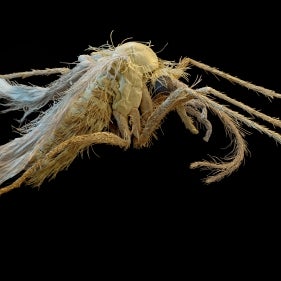
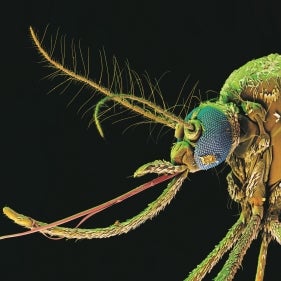
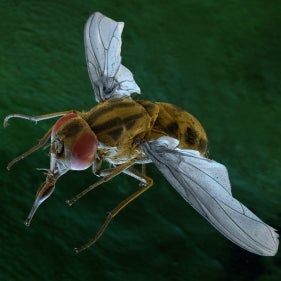
Trypanosomosis is a protozoal infection which can occur in dogs in many parts of the world. The disease is caused by protozoa of the genus Trypanosoma, which are transmitted by tabanids , stable flies, tsetse flies  and triatomid bugs, depending on the species involved. The disease in dogs can be chronic or acute with multiple bleeding, edema, circular and respiratory symptoms and a possible lethal course of disease. Besides the veterinary significance, some trypanosomes infecting dogs possess an important zoonotic potential with the presence of dogs regarded as one of the major risk factors for human infection, as it is the case of T. cruzi in the Americas.

Pathogen

Trypanosoma parasites are flagellate protozoa belonging to the family Trypanosomatidae, which includes blood and tissue parasites of vertebrates, usually transmitted by blood-feeding vectors. Six trypanosome species are known to infect dogs: T. brucei, T. caninum (unknown pathogenicity), T. congolense, T. cruzi, T. evansi and T. rangeli (non-pathogenic).

Trypanosomes are characterized by a longitudinal, fusiform appearance, a flagellum which arouses from the basal body moving forwards, an undulating membrane and a kinetoplast, lying behind the basal body.

The developmental cycle of trypanosomes is typically heteroxenous (that is, part of the cycle occus in a vertebrate and part in an invertebrate host), although the cycle of one species (T. caninum) is still unknown. A cyclic development takes place in the insect host. Trypomastigote forms are taken up by the insect during feeding. Depending on the species, the trypanosomes are multiplying within the insect host in different locations. At the end of the development, metacyclic forms are produced which are transmitted to a new host during feeding.

Distribution

Trypanosoma brucei and T. congolense are the causative agents of Nagana or a similar disease in Africa and Asia. T. evansi is the etiological agent of Surra and the socalled ` Mal de Cadeiras` outside the African continent. Dogs are also infected by T. cruzi, the etiological agent of Chagas disease in several American countries, and by T. rangeli, another human parasite, in endemic areas of this species in Latin America. Additionally, a newly recognized trypanosome, namely T. caninum, has been isolated from dogs in south-eastern Brazil.

Pathogenesis and Transmission

Besides in blood plasma, T. brucei and T. congolense can also be detected in intercellular fluid of tissue. Thus, besides anemia they can also cause degenerative, inflammatory and necrotic lesions in diverse organs due to an intensive invasion of lymphocytes, macrophages and plasma cells. The pathogenicity and virulence of the different trypanosomes infecting dogs is generally variable and dependent on the species, the transmitting tsetse flies, environmental factors and co-infections.

Trypanosoma brucei and T. congolense are two of three pathogenic agents of the so-called Nagana in cattle and horses. The pathogens are usually transmitted by tsetse flies (Glossina spp.) during blood feeding. The trypomastigote form is inoculated by the insect. Within the vector the parasite multiplies in a different form and finally is transmitted to a new host during feeding of the fly. Apart from this cyclic development and transmission, the pathogens can also be transferred mechanically through tabanids and biting flies.

Trypanosoma evansi is the pathogenic agent of the so-called Surra or Mal de Cadeiras in camels, equines and other animals. It is transmitted mechanically by tabanids and stable flies (Stomoxys spp.), and in South America by vampire bats (here for horses). Additionally, dogs can also be infected by consumption of affected meat from T. envansi-infected herbivores.

Trypanosoma cruzi and T. rangeli are both transmitted by triatomines, also known as kissing bugs. T. cruzi is transmitted to a definitive host through the vector’s excrement. Metacyclic trypanosomes penetrate the organism either through normal healthy mucosa or broken skin, often caused by scratching. Ingestion of T. cruzi-infected bugs may also cause infection of the definitive host. Although T. rangeli can also be transmitted through the vector’s feces, the main route of transmission is via saliva, through the bite of an infected triatomine.

Attempts to infect triatomines with T. caninum were unsuccessful. The mode of transmission of this little known trypanosome species remains unclear (Madeira et al., 2009).

Diagnosis

Diagnosis can be performed by blood culture, through the examination of fresh blood andGiemsa-stained blood smears, and by the detection of anti-Trypanosoma antibodies using different serological tests (e.g., indirect immunofluorescence assay). Molecular methods (e.g., polymerase chain reaction) have been also used for the detection and characterization of trypanosomes infecting dogs (Gow et al, 2007).

Clinical signs

Trypanosomosis in dogs can possess an acute or chronic course of disease. The acute course is mainly characterized by fever, a rapidly deteriorating general condition with anemia, leucopenia, thrombocytopenia, circular and respiratory symptoms, multiple bleeding and edema, conjunctivitis and opacity of the cornea. Except from T. congolense infection, central nervous symptoms due to a meningoencephalomyelitis can also occur. In such cases death is going to follow within days. In general, infection by T. cruzi is usually benign, but some dogs might present fever during the first weeks post infection and chronic myocarditis.

Treatment

For therapy, several drugs have been used, including diminazene aceturate, pentamidine isethionate, quinapyramin sulfate, and isometamidium chloride. The duration of the therapy is highly variable, being dependent on the Trypanosoma species involved and dog’s response totherapy. Dogs treated with these trypanocides might present side effects, which can vary from local reactions to tremor, nystagmus, ataxia, convulsions, vomiting. After treatment, relapses are common.

Zoonotic potential

By the mid 1990s, it was estimated that Chagas disease (T. cruzi) had affected between 16 and 18 million people, that 50 million were at risk, and that up to 30% of those infected would develop the chronic disease, with a fatal outcome (Moncayo, 1992; Wanderley and Correa, 1995). The geographical distribution of the disease, only existing in the Americas, is from 42° N latitude in the US (from California to Maryland) to approximately 34° S in Chile and 42° S in Argentina. Some 150 mammal species are susceptible to T. cruzi, with dogs, cats, rodents, and both domestic and wild lagomorphs constituting an important reservoir for human infection.

It is generally believed that T. cruzi infection is asymptomatic in wild animals, possibly due to lack of detailed clinical examination. In dogs cardiac changes have been documented (Blandon et al., 1995). Dogs with acute experimental infections have exhibited alterations in the neurons of the Auerbach’s plexus and myositis in the lower third of the esophagus (Caliari et al., 1996). The chronic form in dogs is, as in man, characterized by myocarditis. Occasional reports of alterations in the brain and the peripheral nerves during the acute and chronic phases in dogs have also been recorded.

Several studies have shown that one of the major risk factors for T. cruzi infection in humans is the presence and number of dogs in the home (Acha and Szyfres, 2003). This observation would indicate that dogs are an important source of food and infection for the vectors (Gürtler et al., 1998), thus, participating in the zoonotic cycle of transmission of T. cruzi.

References

  • Acha, P.N., Szyfres, B.: Zoonoses and communicable diseases common to man and animals. 3rd edn. Vol. III. Parasitoses. Scient. Techn. Pub. No. 580, 2003, Pan Am. Health Org. (PAHO)
  • Blandon, R., Leandro, I.M., Johnson, C.M.: [Clinical, electrocardiographic and angiographic evaluation of natural reservoirs of Chagas' disease in the Republic of Panama.] Rev. Med. Panama, 20, 1995, 108-115 (in Spanish)
  • Caliari, E.R., Caliari, M.V., de Lana, M., Tafuri, W.L.: [Quantitative and qualitative studies of the Auerbach and Meissner plexuses of the esophagus in dogs inoculated with Trypanosoma cruzi.] Rev. Soc. Bras. Med. Trop., 29, 1996, 17-20 (in Portuguese)  
  • Gow, A.G., Simpson, J.W., Picozzi, K.: First report of canine African trypanosomosis in the UK. J. Small Anim. Pract., 48, 2007, 658-661
  • Gürtler, R.E., Chuit, R., Cécere, M.C., Castañera, M.B., Cohen, J.E., Segura, E.L.:  Household prevalence of seropositivity for Trypanosoma cruzi in three rural villages in northwest Argentina: environmental, demographic, and entomologic associations. Am. J. Trop. Med. Hyg., 59, 1998, 741-749
  • Madeira,M.F., Sousa, M.A., Barros, J.H., Figueiredo, F.B., Fagundes, A., Schubach, A., DE Paula, C.C., Faissal, B.N., Fonseca, T.S., Thoma, H.K., Marzochi, M.C.:Trypanosoma caninum n. sp. (Protozoa: Kinetoplastida) isolated from intact skin of adomestic dog (Canis familiaris) captured in Rio de Janeiro, Brazil. Parasitol., 136, 2009, 411-423 
  • Moncayo, A.: Chagas disease: epidemiology and prospects for interruption of transmission in the Americas. World Health Stat. Q., 45, 1992, 276-279
  • Wanderley, D.M., Corrêa, F.M.: Epidemiology of Chagas' heart disease. Sao Paulo Med. J., 113, 1995, 742-749

Services

Search & Find

Advanced Search


International Websites of Bayer HealthCare Animal Health

Links

Last changed: 29.07.2010